
Balance and Boredom
I have long felt a desire to push hard in the areas where I want to improve. To really go for it. To work a lot of hours, side hustle, go back to school, spend two hours in the gym every day. To put in heroic effort for an outsized result.
I want to push. To drive. To accomplish things. Time is short. Memento Mori.
It drives me crazy listening to successful authors and podcasters talk about balance and self-care. They leave out the fact that they weren’t balanced—or self-caring—in the least while they were on the rise. Maybe they would have gotten there if they’d gone a little slower, rested more, tried less hard. But maybe not. Maybe that’s what it takes.
I have a governor inside me (David Goggins would hate me)—something that tells me not to go too far. A belief. A genetic set point. A fear of success. A preference for the 80% solution. I am very attracted by the Pareto principle, books like Essentialism, and “hacks” that get you most of the way there. Maybe I’m attracted to it because I’m fundamentally lazy. Maybe I don’t have time. Maybe I have decision fatigue. Maybe it’s just how I’m built.

Tim Ferriss, Andrew Huberman, and Chris Williamson share a lot in common. They have excellent podcasts and books. They’re wealthy. They’re jacked. They live exciting lives, eat steak for lunch, and get free Eight Sleep mattresses mailed to them. These guys fly around the world, hunt elk, and hang out with Sleep Token.
They are brilliant and have worked hard to be where they are.
Tim Ferriss is my OG podcast bro. He’s the big brother I never had and someone I very much look up to. He’s thoughtful, detailed, adventurous and willing to methodically try almost anything. He happens to life, not the other way around. I like that.
Huberman has very similar traits and I appreciate how much raw intelligence he has. He developed this through many years of work under the radar. Building that System 2. He was something like 45 years old when he hit the podcast scene.
Chris Williamson is almost exactly my age, seems like he has a very similar mind to mine and is still on the come up. He definitely hasn’t peaked yet, although is incredibly successful already. He is open about his journey with all the ups and downs.
These guys give me heartburn.
I see in them examples of what could have been—or might still be—in me. They are the easiest examples that I have of successful people. I’ve found them and they feel similar to what I am made of. They aren’t exactly like me, I feel like I am less perfectionistic, less System 2, than these guys. I appreciate that they are like that, I benefit a lot from it, I just don’t think I’m totally there on a lot of what they do. It also seems to torture them, so I’m not overly interested in trying to develop that trait. I think I’d rather work with people like that.
But—is that what it takes?
Another thing about these guys: they aren’t married, aren’t in long-term relationships, and don’t have children. It strikes me as… telling. Indicative of something. I have heard each of them express the desire to be in relationships and want to be fathers. Yet, they seem unable to accomplish that.
I’ve been in a relationship with my wife for almost 20 years. It’s been loving, faithful and a lot of fun! We have been through a few hard things too. We’ve been in debt, we’ve been sick, and we’ve gone through issues with our families.
This relationship is the most important thing in my life. I’ve also felt—rightly or wrongly—that it held me back. The idea of having to come home on time or spend money where I rather not has been difficult.
It might feel like an anchor—but it may be more like the tail on a kite. I might spin out—fail to fly straight, crash—if it weren’t for the steadying, workaholic-preventing nature of a relationship like ours. I might have dealt with the depression, anxiety, suicidal thoughts and whatever else these guys have as they move through life.
The thing is, I don’t have any context for my podcast bro’s experience. There is no counterfactual for my life either. Monica has loved me before I loved her. She’s always been there, she supports me and looks out for me, she listens, encourages and is just there every night when I get in bed. I grew up with her! We really hope to have kids one day and I’m so excited to do that with her. Even if we don’t become parents, it’ll be fine. A relationship like this isn’t something to take lightly or for granted, even if (read: especially if) it’s just always been there.
I do find myself trying to maximize my mentality though. I think a lot about my drive, how hard I push and what I prioritize.
Daniel Kahneman, a behavioral economist, discusses this in his book Thinking, Fast and Slow. He coined the terminology System 1 and System 2 thinking.
System 1 is instinctual and intuitive—driving to work, recognizing a friend’s face, relying on stereotypes.
System 2 is analytical/effortful—learning new software, driving in Europe on the wrong side of the road, and it turns out, writing out your thoughts logically on a blog.
There are good reasons to pull one strategy out over another, but I have seen in my life that there is a natural set point that we have. A part of the spectrum you are more comfortable with. I’m definitely somewhere pretty far along on the orange side.
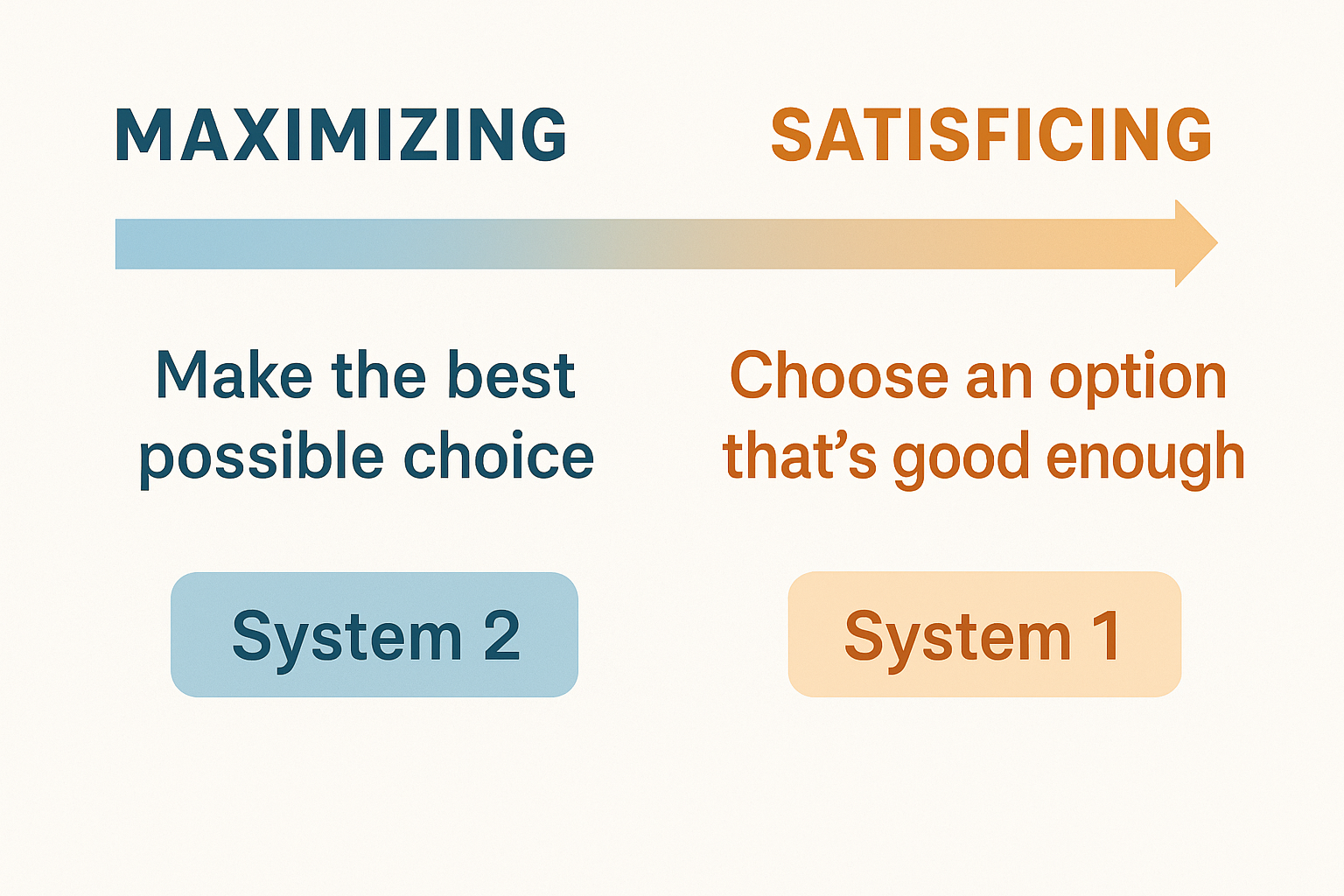
School and life give you education and experience that are effortful. These effortful periods build capacity for System 2 —analytical thinking—but primarily build ways of looking at the world that don’t need reanalysis every time you experience something. Even something new will overlap with a set of experiences you’ve had and you will know what to do. This is judgment or wisdom; and people are paid significant sums for that. Another way to say it is you’ve developed your ability for System 2 thinking and turned that into System 1 thinking that is deployable.
I think I’ve inadvertently trained my System 1 thinking around success—entrepreneurship, freedom of time and location, and fuck you money.
It also seems like it comes with imbalance, needing to heal, and having a black dog follow you around. I hope that this isn’t true. Tim, Andrew and Chris don’t boast about these things, they are working on them.
I feel relatively balanced in my life right now. But, I am doing very well inside my corporate job and don’t feel totally successful without doing it in a way that looks like these guys. I’m tempted to start pushing harder and know it’s hard enough only when other areas of my life start breaking. I also can see how foolish that sounds.
The question still sits there though, how much balance in life should I strive for?
Do I fill every waking moment working towards my goals?
Is that even the best strategy?
What should be sacrificed to what?
There is something to be said about resting, letting life unfold and allowing for inspiration and opportunities to come to you. To be on the watch and ready to jump at them, but not to grasp, not to pull or force things into being.
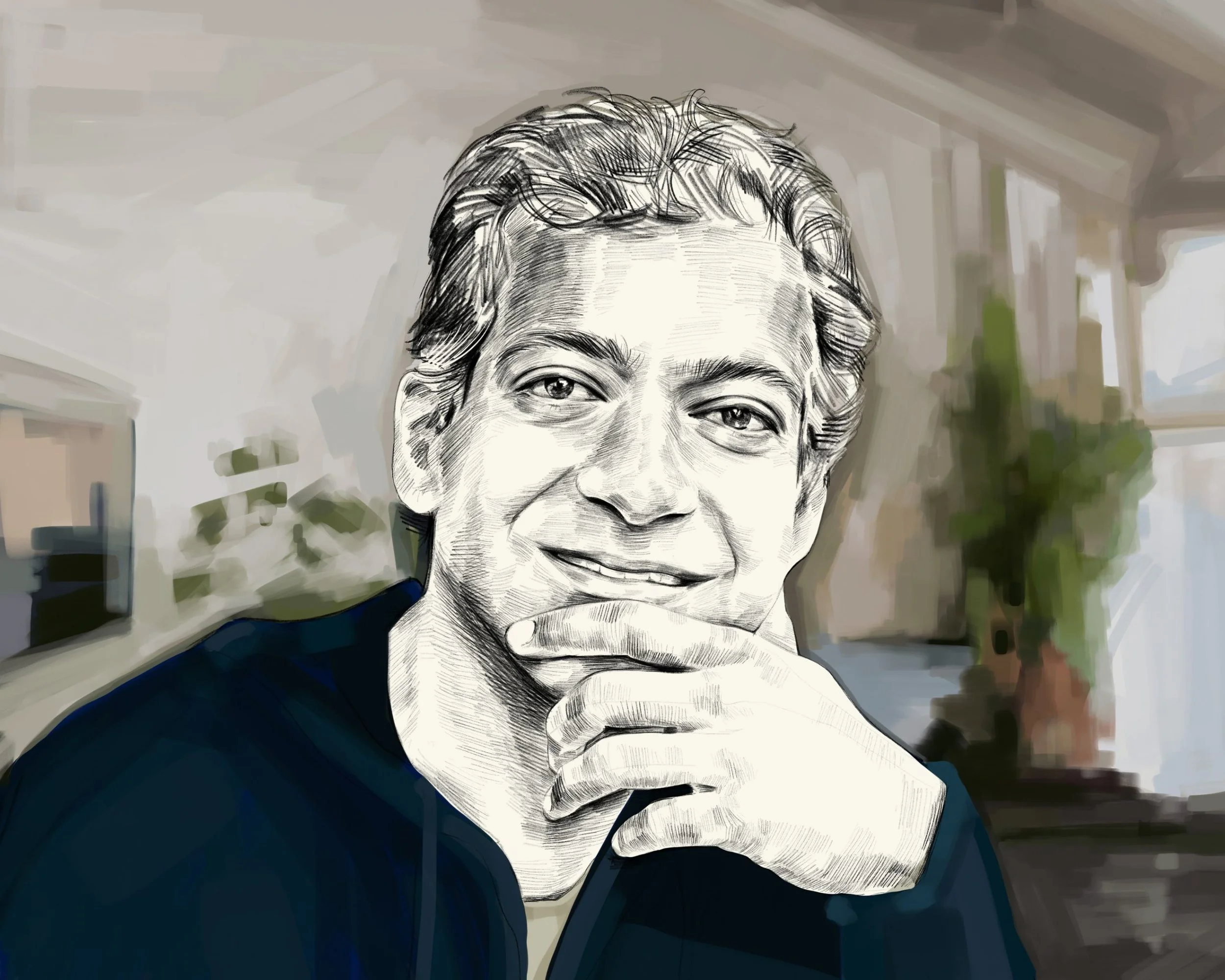
A calm mind, a fit body and a house full of love. These things cannot be bought—they must be earned. - Naval Ravikant
Naval is a sage in our time. A modern Thales of Miletus. He’s financially successful but also seems to actually have the things he says are important. If you want to be a philosopher king, first become a king and then become a philosopher. That’s another one of his sayings - I think that was his path. I’d like that path too.
As you can see, I’m firmly caught in the hustle culture web. I’m not even mad at it - but I do wrestle with it. Maybe there is an ideal order to things, maybe it would be financially best to grind it out in your 20’s and 30’s and then find your spouse so you can sale into the sunset. Mine came the other way around.
I will approach my success in life with a Satisficing mindset - balancing the optimization problem across mind, body and love. In some ways, the constant tension is less peaceful - but more fulfilling in a deep way.
A few more balanced decades in the tank are worth a few less zeroes in the bank.
And who knows—maybe I get those zeroes too.